AI
Tech
Sep 24, 2026
4 minutes


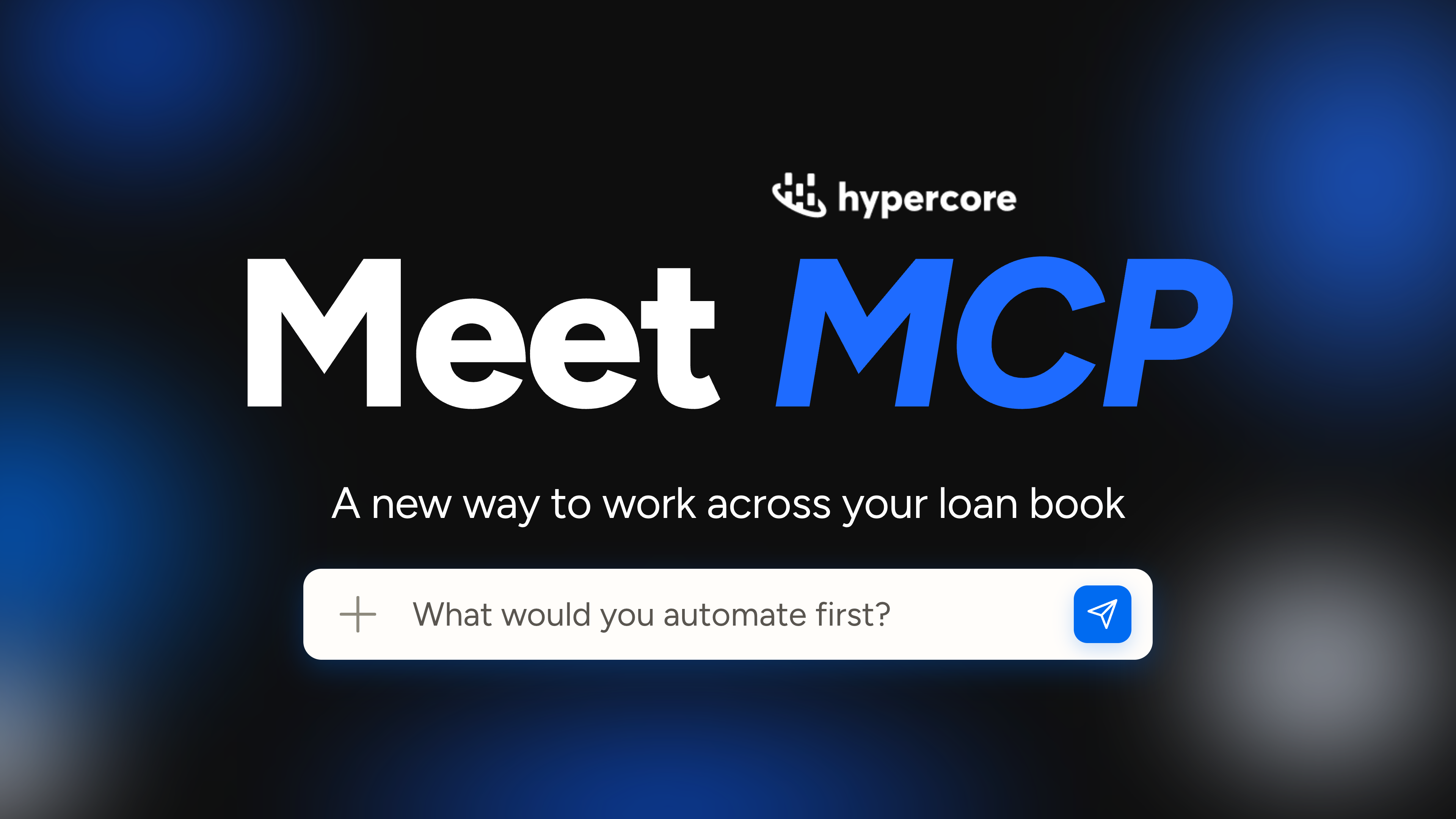
Hypercore MCP is now available to clients in beta, connecting compatible AI assistants to Hypercore’s loan data and operational tools.
The launch gives teams a way to build workflows around the work they need done, using AI agents to read, analyze, and initiate actions across the loan book. Agents can prepare changes to loan terms, transactions, fees, new loans, and other supported operations. Every proposed write enters Hypercore as a draft change request for the team to review. Nothing takes effect until a person approves it.
Agents can do real work in Hypercore. The team stays in control of what happens next.
MCP, or Model Context Protocol, provides a standard way for an AI assistant to connect to tools and data in another system. But connecting an assistant to an API is only the first step. The important questions are what the agent can do with that connection, how its work is handled, and how the team stays involved.
Hypercore MCP connects compatible assistants, including Claude and ChatGPT, to Hypercore’s loan data and supported operations. The assistant can use that context to respond to questions, analyze the loan book, and call tools that initiate operational work.
Clients can build workflows to fit their own needs. A team might use an assistant to examine portfolio exposure, support covenant monitoring, prepare LP reporting, or initiate a batch of loan updates. The available tools determine which actions an agent can initiate in Hypercore.
When a team member asks an assistant to make a supported change, the assistant calls the relevant Hypercore tool with the requested action and loan details. Hypercore creates a draft change request for each affected loan. The call does not directly update the loan record.
For example, a team member could ask an assistant to prepare a fee change across 30 loans. The assistant can initiate the requests through Hypercore’s tools, and each affected loan receives a draft for review. Team members can see what the agent proposed, inspect the details, and approve or reject the requests through Hypercore.
Every AI-generated request is marked as such and recorded in an audit trail. Where enabled, a second reviewer can be required. A loan with a pending request is protected from conflicting edits while the request is under review.
This design lets agents prepare work at the scale of a portfolio while keeping the resulting changes visible and subject to the team’s approval process.
An agent working with financial data needs more than access to an API. Its actions need to enter the same operational process the team uses to manage the loan book. Otherwise, work can happen outside the system, leaving the team to reconcile what the agent did and what the official record shows.
With Hypercore MCP, the assistant connects to the tools Hypercore makes available, and Hypercore routes supported writes into its change-request workflow. The team can see what was requested, which loans are affected, and whether each request is pending, approved, or rejected.
That’s what makes the connection useful in lending operations: agents can participate in real workflows without bypassing the controls around the loan record.
Loan management platforms have traditionally been systems of record: they store loan data and capture what has happened. As agents take on more operational work, the platform can become a system of action too - a place where teams build workflows, agents prepare and initiate work, and people decide what proceeds.
Hypercore MCP gives clients a way to build toward that future with the tools and controls in place. The opportunity is not limited to asking questions about the loan book. Teams can put agents to work on the tasks around it, using their own workflows and keeping decisions in their hands.
Hypercore MCP is available to clients in beta. Contact Hypercore to discuss the workflows your team could build - contact@hypercore.ai.
Roadmap
Tech
Sep 1, 2026