AI
.png)
Sep 29, 2026
3 minutes


An MCP connection gives an AI assistant access to tools. The infrastructure behind that connection determines whether it can take part in real loan operations, with the right controls in place.
Connecting an AI assistant to a loan platform can make loan data easier to query. Moving from questions to actions is a bigger step. Reading a loan term returns information. Changing that term affects a live record that other operational work may depend on.
For many private credit teams, that risk has kept AI agents on the read side of the loan book. The agent can find or analyze information, but people still have to carry the work into the loan system and make the change themselves.
MCP can provide the connection that lets an AI assistant use tools exposed by another system. But a connection alone does not establish what the agent may do, how a proposed change gets reviewed, or who has authority to approve it.
The Model Context Protocol gives applications a standard way to expose tools that AI models can discover and invoke. A tool might retrieve information or initiate an operation in a connected system. The MCP specification also describes how tools are listed and called, but leaves the user interaction model to the application implementing them. It recommends that people be able to deny tool calls and confirm operations.
In practical terms, MCP creates a technical path between an AI assistant and a system such as a loan platform. The assistant can call a tool; the connected application determines what that tool can do and what controls apply.
That division matters. MCP provides connectivity. The system holding the loan record provides the context, permissions, workflow, and approval rules that govern changes.
A read tool returns data. A write tool can initiate a change. In a loan operation, that could mean preparing a term update, recording a transaction, or adding a fee.
The difference is more than technical. The agent must identify the relevant loan and prepare the requested change in a form the team can examine. The platform must preserve the existing approval process and prevent a proposed change from taking effect before the required approval.
OWASP identifies excessive agency as a risk when AI systems have more functionality, permissions, or autonomy than a task requires. Its guidance recommends limiting tool capabilities and permissions, and requiring approval for high impact actions.
For private credit, that means write access should be designed around specific operational tasks. A tool that prepares a defined loan change is easier to govern than broad access to edit records. And the proposal should enter the loan platform’s workflow, where the team can review it, rather than being applied directly from the AI conversation.
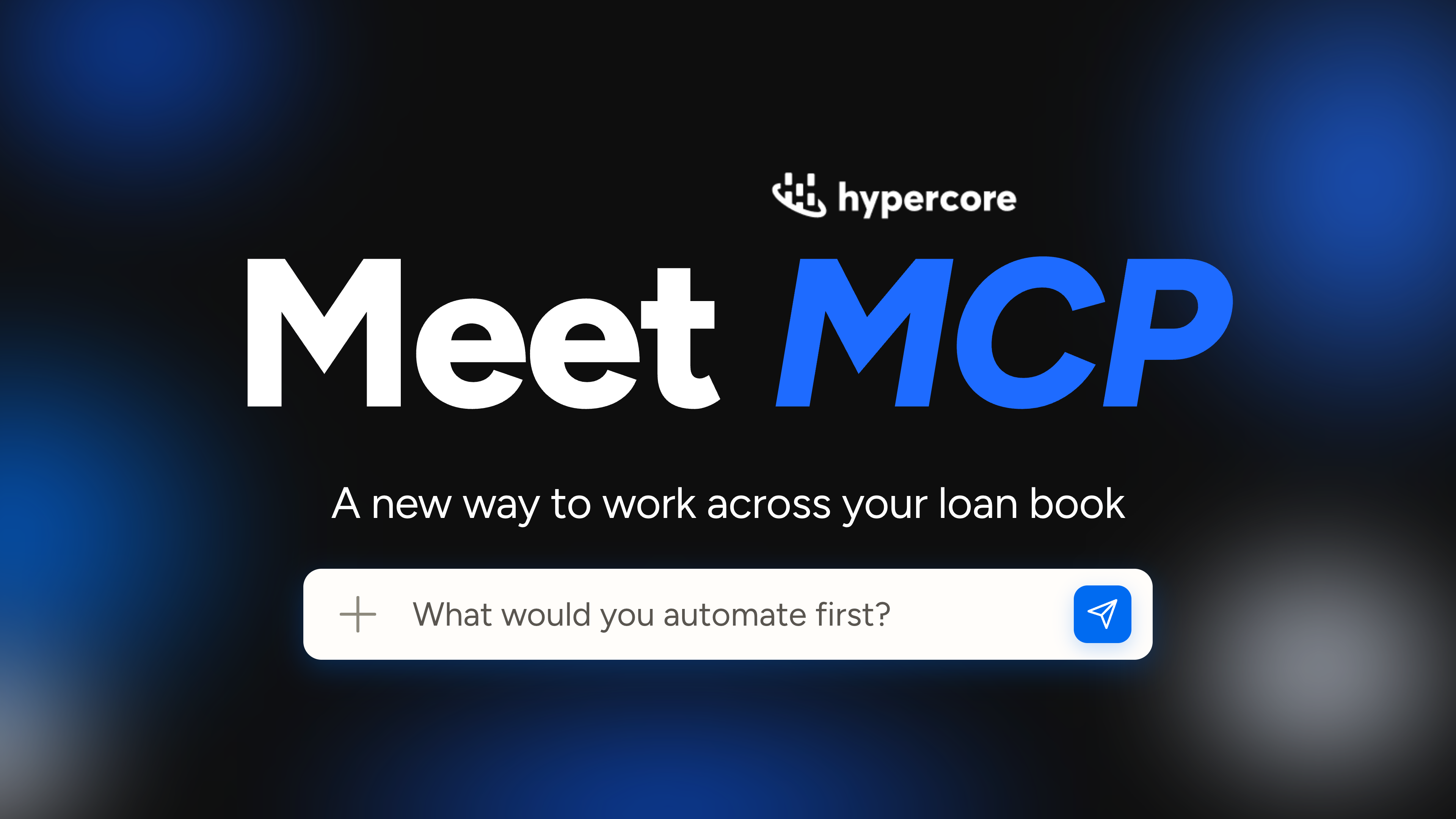
Hypercore MCP connects compatible AI assistants to Hypercore. For supported actions, the assistant’s request creates an individual change request on the relevant loan. The team can review and approve or reject the proposed change before it takes effect. The request and audit trail remain visible in Hypercore.
This is how the connection moves from reading to acting while keeping the team in control. The agent can prepare operational work; the platform turns that work into a reviewable request; the team decides whether the change is applied.
The approval step is not a claim that the AI will always be right. It is a defined boundary between what the agent proposes and what becomes part of the loan record. NIST’s Generative AI Profile recommends managing AI risks across the lifecycle and in the context where a system is used, which supports treating controls as part of the system design rather than as a prompt added at the end.
MCP gives an agent a way to reach tools. The loan platform supplies the context and controls that make those tools useful in operations: trusted loan data, defined actions, approval workflows, and a record of what happened.
With that infrastructure in place, an agent can prepare work inside the system where the loan is managed, and the team can decide what becomes part of the record. That is how Hypercore moves from a system of record to a system of action, where clients’ agents can initiate work on the loan book within controls their teams already use.
Watch the on-demand recordings from our latest AI Forum to see these ideas in action and discover what you can build with AI.
AI
Tech
Sep 24, 2026